Funding Strategies with PCORI
ResearchCON

Erin Colligan, PhD, is a Senior Program Officer at the Patient Centered Outcomes Research Institute (PCORI), where she oversees a portfolio of comparative clinical effectiveness research (CER) studies focused on chronic diseases and social drivers of health. Dr. Colligan contributes to the development of CER funding announcements, serves as a point of contact for potential awardees, reviews letters of intent, and guides successful applicants through the selection and contract execution process. Dr. Colligan also co-leads the Managing Pain workgroup at PCORI. She received her PhD in Health Services Research and Policy from the Johns Hopkins Bloomberg School of Public Health. Her prior work includes evaluations of Medicare Accountable Care Organizations at the Centers for Medicare and Medicaid Services and NORC at the University of Chicago.
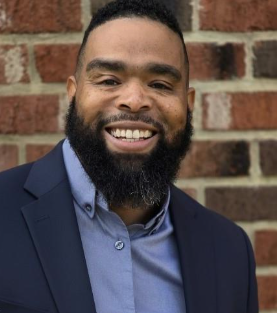
Antwyan Jones is a dedicated public servant, Army veteran, and technology professional with almost 30 years of experience supporting city operations, data systems, and community services in Greensboro, North Carolina. His career with the City of Greensboro began in the Engineering Department as a Land Surveyor, where he built a strong foundation in fieldwork, mapping, and infrastructure development. Driven by a passion for technology and service, he later transitioned to the Transportation Department as a GIS Analyst, where he applied his expertise to citywide planning and infrastructure initiatives. Over the next eighteen years in the Department of Transportation, he developed deep expertise in data management, systems integration, and strategic project coordination.
Since 2016, well before the LLM (Large Language Models) era, Antwyan has adopted AI to improve his personal life, city workflows and digital access. He has trained staff and community partners on Responsible AI, helping people approach AI with confidence rather than fear. His advocacy focuses on mitigating model and data bias and confronting AI’s environmental footprint, urging the pursuit of sustainable energy solutions beyond freshwater-intensive cooling and nuclear power so that innovation advances without compromising community or climate.

Alice Mahood is the Director of Integrated Data and Services for Guilford County and a graduate of the UNC School of Government. Her career has been dedicated to using good data to tell the stories that matter most—stories about people, communities, and the systems that connect them. With experience in local government across North Carolina and New England, Alice has worked to bridge the gap between information and action, helping teams see how data can illuminate challenges and spark meaningful change. She is especially drawn to work that brings people together across departments and disciplines to learn, solve problems, and build a shared understanding of what helps communities thrive.

Jess Thomas (MLIS, CETL) serves as the Director of IT Support and Educational Technology for Guilford County Schools, leading districtwide technology support, instructional technology strategy, customer service operations, and key data privacy and security governance efforts for more than 80,000 users. With a background spanning teaching, library services, digital learning, and ed‑tech leadership, she has driven major district initiatives that modernized devices, upgraded systems, improved customer service, strengthened data management, and fostered strong cross‑departmental collaboration.
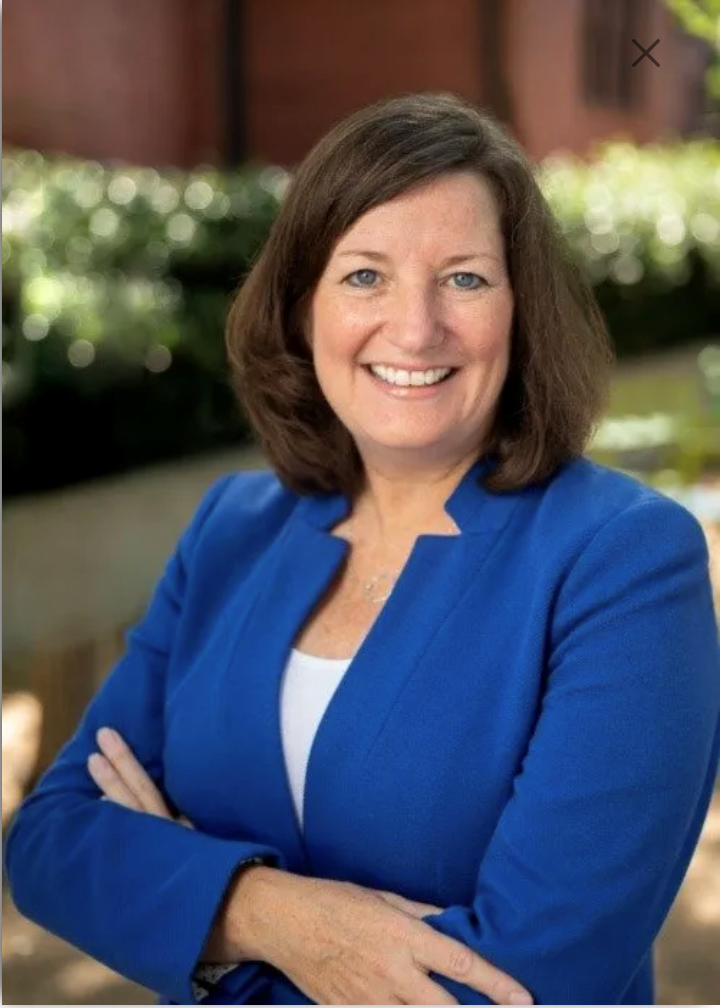
Mary is a servant leader with a 25-year career as a strategy consultant, nonprofit executive, writer, facilitator, and community change agent. She has led grassroots efforts and established organizations, galvanizing people across multiple sectors to work together to achieve a common goal. She is passionate about connecting people and resources to help address Guilford County’s biggest challenges.
Most recently, Mary served on the executive leadership team at the Kellin Foundation and in a variety of roles at Ready for School, Ready for Life, including executive director.
A Dayton, Ohio native, Mary lived and worked in DC, Chicago, and Denver before making her home in Guilford County. She is the proud mom of two daughters who keep her laughing and grounded.
Fun Fact: Upon moving to North Carolina, Mary’s first volunteer experience was serving as a volunteer consultant with the Guilford Nonprofit Consortium.

Adam Ward is an experienced IT leader currently serving as IT Services Director for the City of High Point, North Carolina, where he manages IT Services, 911 Telecommunications and Radio Communications operations. With over 15 years in progressively senior roles, Adam has successfully led significant technology projects, including city-wide network deployments, datacenter migrations, and cybersecurity enhancements. He holds a Master’s degree in Information Systems and a Bachelor’s in Information Systems Security from the University of Phoenix, along with multiple technical certifications. Adam is dedicated to strategic technological advancements that benefit the community.

Tarik is a Salisbury native who currently lives and works in the Research Triangle. In January 2024 he joined The Institute for Emerging Issues (IEI) as a Policy and Program Manager. IEI serves as a nonpartisan connector, bringing North Carolinians together across sectors, regions, and perspectives to collaborate on finding solutions to the state’s emerging and most critical policy issues resulting in a more vibrant and prosperous North Carolina. He works to conduct research and convene multi-sector stakeholders often at the intersection of economic development, health, education and the built and natural environments. Currently, Tarik is focusing on the future of infrastructure policy and its relation to regional preparedness.
Prior to joining IEI, Tarik worked with the James B. Hunt, Jr. Institute for Educational Leadership & Policy as an Associate Policy Analyst. In this role, he conducted research and analysis on relevant policy areas and provided information for dissemination to legislators, educators, business leaders, and other experts. He is a fellow of the North Carolina Institute of Political Leadership, serves on the Young Alumni Leadership Council at UNC-CH, the Durham Community Advisory Council, and the Triangle Community Foundation Advisory Board.
Tarik attended UNC Chapel Hill where he studied Economics and Philosophy and in his free time he plays the cello in a local orchestra, volunteer fire fights, and roots for the Tar Heels in ALL athletics.

Dr. Andrea “AC” Crowley is a system-level strategy and innovation leader focused on advancing future-ready education and workforce ecosystems. As Executive Director of the North Carolina Student Success Center, she leads statewide efforts that position North Carolina’s 58 community colleges as responsive systems for lifelong learning, reskilling, and economic mobility amid rapid technological and labor-market change.
She leads state-level strategy alignment across education, workforce, and economic development agencies, clarifying how we can design and elevate an integrated state-wide talent enterprise strategy and center community colleges as premier knowledge towns and skills labs across our great state. Crowley’s LOOP model connects learning and work experiences as open, cooperative systems—emphasizing learner-worker-centered design and continuous systems improvement, through practical “Future Work Ready” skills integration as technologies continuously shape the future of work.
Dr. Crowley earned her Doctor of Education (EdD) from the University of Mississippi, a Master of Business Administration (MBA) from Belmont University, and an undergraduate degree in Economics and Finance from the University of Hartford.

John Hardin serves as Executive Director of the North Carolina Board of Science, Technology & Innovation, housed within the North Carolina Department of Commerce’s Office of Science, Technology & Innovation. Appointed Executive Director in 2009 after serving as Deputy Director and Chief Policy Analyst, he leads the Board’s efforts to advise the Governor, General Assembly, Secretary of Commerce, and economic development partners on the role of science, technology, and innovation in driving statewide economic growth. His work includes shaping legislation, guiding research and innovation policy, overseeing strategic initiatives and grant programs, and advancing technology-based economic development across North Carolina.
Previously, Hardin served as Assistant Vice President for Research and Sponsored Programs for the UNC System and has held teaching appointments at UNC–Chapel Hill in political science and public policy. A widely published scholar and frequent presenter on American politics and science policy, he holds a Ph.D. and M.A. in political science from UNC–Chapel Hill and a B.A. in economics from Baylor University. He lives in Durham with his wife, Jane, and they have two adult daughters.

Christopher S. Hayter is a Faculty member at the Georgia Institute of Technology’s Jimmy and Rosalynn Carter School of Public Policy, where his research focuses on innovation, entrepreneurship, and science and technology policy. He is widely recognized for his contributions to the study of academic entrepreneurship and the role of universities in regional economic development.
Dr. Hayter’s scholarship examines how knowledge generated in universities is translated into economic and societal impact, with particular emphasis on technology commercialization, innovation ecosystems, and entrepreneurship development. His work has helped advance understanding of how universities, startups, and policy frameworks interact to support innovation and economic growth.
He has authored more than 50 publications and has been cited over 3,000 times, reflecting the influence of his research in the fields of technology transfer and innovation policy. His recent work explores early-stage entrepreneurship programs, knowledge spillovers from federally funded research, and new models for supporting scientific innovation.
Dr. Hayter holds a Ph.D. and M.A. in Science and Technology Policy from George Washington University and a B.S. from the U.S. Coast Guard Academy.