Repost from UNCGNow
It may be a special person who decides to pick up a snake or a frog, but encounters with these small creatures can influence how we take care of natural environments in our own backyards, and at a global level.
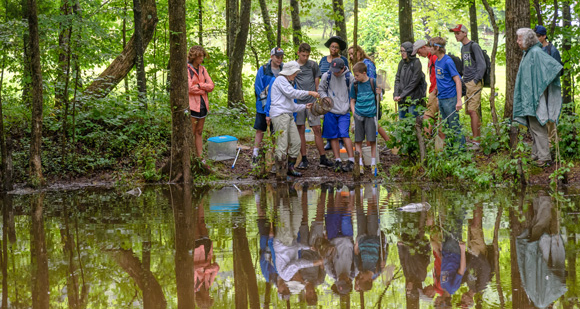
Every summer since 2007, UNC Greensboro biologists and science educators have been bringing high school students into nature, where they encounter a variety of species, perform authentic ecological fieldwork and become active citizen-scientists contributing to real-world data collections. The programs are called Herpetological Research Experiences (HREs) and are commonly known as “herp camps.”
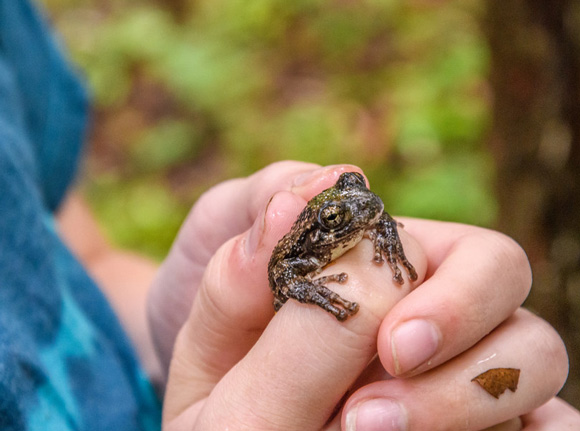
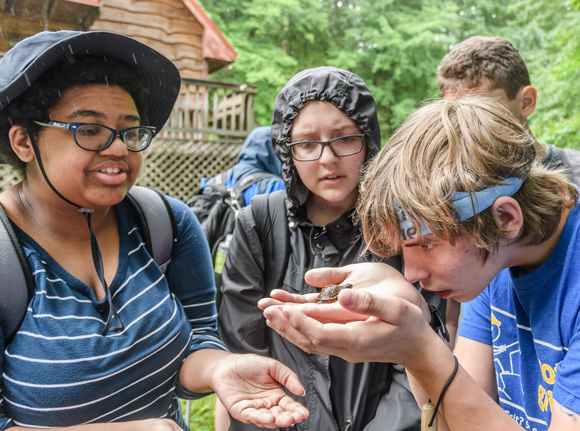
“It’s exciting for students to get up close and personal with wildlife,” says Ann Somers, a faculty member in the Dept. of Biology and a leader in the UNCG Herp Project. “They get to look animals in the eye. They also learn to safely catch and release these animals unharmed.”
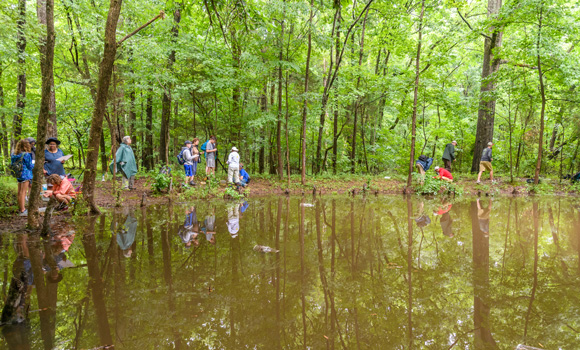
In June, Somers and UNCG professor emeritus Dr. Catherine Matthews advised a creature-capturing program at Camp Chestnut Ridge in nearby Efland, with 9th through 12th-graders, not only from North Carolina, but from as far as Ohio and Florida.
But their contribution to biological camps extends far beyond that. The material they and other members of the Herp Project have created and assembled – activities, curriculum, recommended texts, techniques and guidelines – are available online for all citizen-scientists and those who would like to conduct an HRE.
Somers and Matthews lend their support to at least six camps across North Carolina who use their materials, including programs at the Eno River, the North Carolina Botanical Gardens and the Greensboro Science Center.
In all the camps, students locate many species of reptiles and amphibians, identify them, take measurements and submit the data to a Herp Project app that feeds the information to a database used by other citizen-scientists, as well as professional herpetology researchers. Their research becomes part of The Box Turtle Connection, a statewide program that involves 32 research stations across North Carolina. The students also begin to see and understand the herps in their own backyard, and they pass that knowledge on to their friends and families.
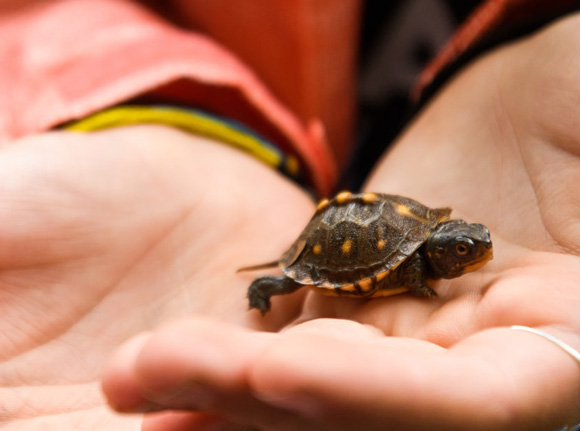
Many of the campers return year after year, and some become Spartans and HRE project leaders, partly due to those positive experiences with hands-on research. Herpetology Project participants have also gone on to do further research at the Brookhaven National Laboratory in New York, the Smithsonian National Institute in Washington, D.C., the Bioko Biodiversity Program in Equatorial Guinea and stations as far as Indonesia and Australia.
“It’s something that has a purpose. You get to work with animals and it’s a lot of fun,” says Nathan Kellam, who has attended the Science Center herpetology camp for all four years and this fall will be a first-year student in the School of Education.
Somers and Matthews are thrilled that their legacy has continued, through the HREs, educators in North Carolina and beyond, campers past and present and the knowledge they will carry with them throughout their lives.
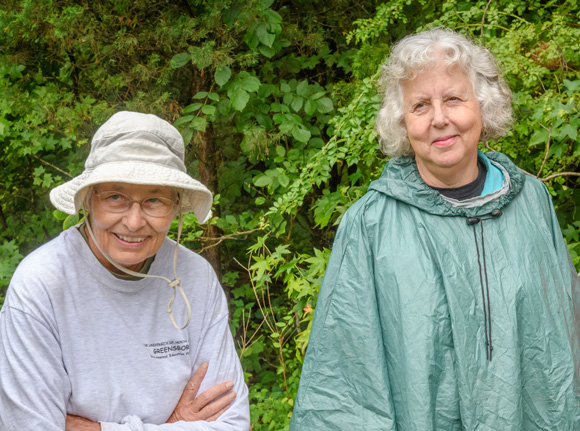
“The magnificent thing about reptiles and amphibians is that you can handle them safely,” explains Somers. “It’s a way for people to establish an affinity with the natural world, and to develop a rapport with animals. That helps us make good decisions that impact the livability of the planet.”
To learn more about the Herp Project at UNC Greensboro, click here.
Repost from UNCGNow
Story by Susan Kirby-Smith, University Communications
Photography by Martin W. Kane, University Communications