From the Fall 2017 issue of UNCG Research Magazine
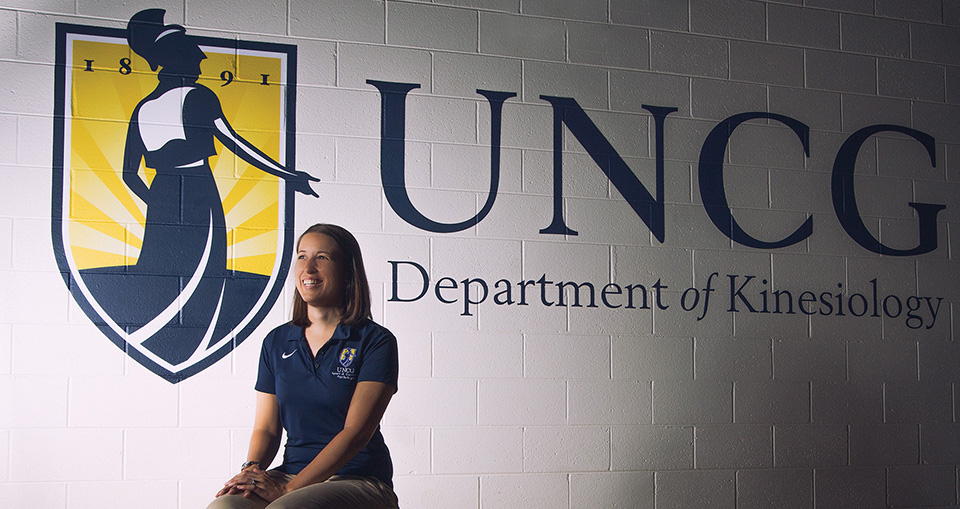
As a field hockey goalkeeper in college, Dr. Erin Reifsteck was no stranger to long hours in the gym. But, after graduation, she found it difficult to keep up the regimen.
“My college athletic experience was a big part of my identity, and that transition out was challenging,” says the assistant professor of kinesiology. “You lose part of who you are. I wondered if others faced similar problems.”
Being a physically fit college athlete doesn’t mean someone automatically knows how to become a healthy adult. Many struggle to find the right path.
“They know how to intensely train, but in many cases, they don’t know as much about maintaining a healthy lifestyle,” explains Reifsteck.
Recent studies indicate college athletes may be at risk for developing a range of chronic health problems once they stop competing, she says. “Coupling regular physical activity with healthy eating is key to preventing this.”
The two-time Academic All-American and Northeast Conference Scholar Athlete of the Year began her investigation into the issue as a graduate student at UNCG. Reifsteck wanted to know what motivates student-athletes to stay active after college and how they view themselves post-graduation. By surveying former student-athletes, she developed a theoretical model for how identity and motivation impact health behaviors.
Enter the “Moving On!” program. Reifsteck launched the initiative as a postdoctoral fellow at the UNCG Institute to Promote Athlete Health and Wellness, collaborating with UNCG Associate Professor of Nutrition Lenka Shriver and Salem College Associate Professor of Exercise Science DeAnne Brooks. The program helps former college athletes transition to healthy post-college lifestyles.
The three researchers are all former Division I student-athletes. “It has a personal connection for us,” explains Reifsteck.
Photography by Mike Dickens