From the Spring 2018 issue of UNCG Research Magazine
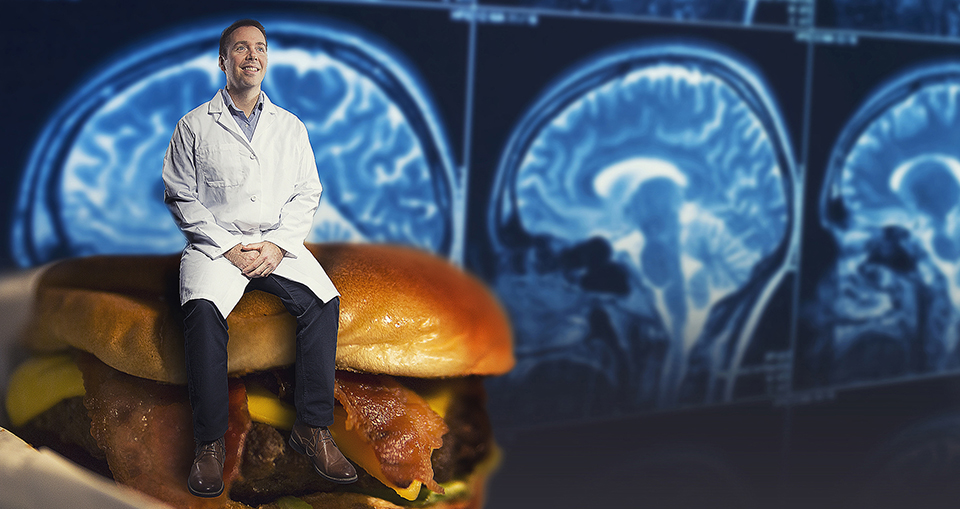
High saturated fat diets physically alter the way we think about food. They wreck the brain’s pleasure center, requiring ever more saturated fat to elicit the same level of enjoyment. Assistant professor Steven Fordahl is determining how and why that wreckage occurs.
Dr. Fordahl explores the flow of neurotransmitters in the brain to identify the causes of — and potentially treatments for — obesity. Obesity is one of the fastest growing public health concerns in America. According to the Centers for Disease Control and Prevention, it affects over one-third of our population.
To better understand obesity’s dominance over the brain, Fordahl measures real-time neurotransmission in response to food intake. The technique is typically used to map neural circuitry, but Fordahl, who joined UNC Greensboro’s Department of Nutrition last year, uses it to illustrate the profound effect that dietary choices have on normal brain function.
Fordahl’s work builds upon research conducted during his postdoc, which found that the brain responds differently to various types of dietary fat. He says an ideal diet limits saturated fat in favor of mono- and poly-unsaturated fats. The combination helps the brain control appetite, leading to less potential for overeating.
As we consume food, the brain releases the neurotransmitter dopamine as a messenger to the central nervous system. The dopamine activates specific neural circuits to tell us we are full and feel content. During his postdoc, Fordahl measured dopamine neurotransmission in response to diets high in saturated fat and found significant reductions in regular dopamine message delivery.
“Saturated fat highjacks the brain’s reward system in a way that may promote overeating, especially over time,” he says. “A diet that is high in saturated fat may change the way we perceive the foods we are eating.”