From the fall 2017 issue of UNCG Research magazine
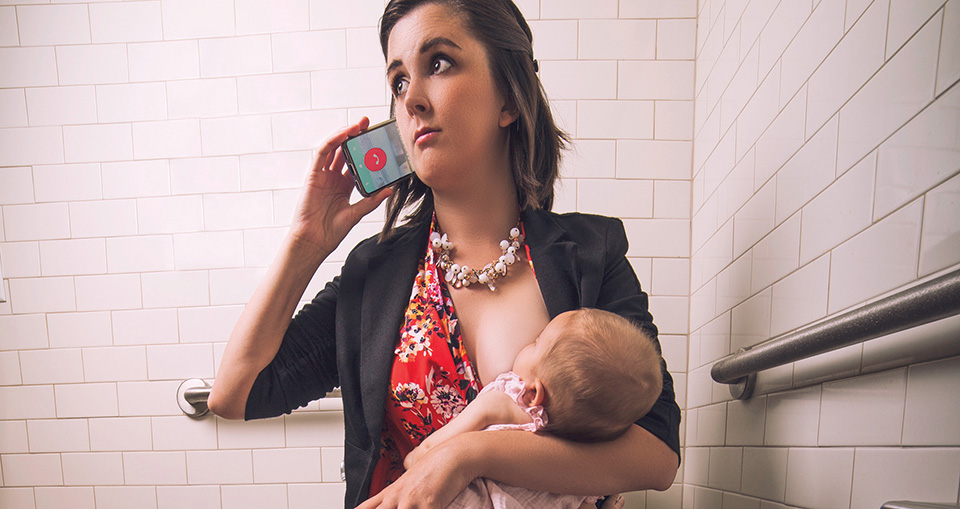
The right to breastfeed isn’t only about feeding babies. It’s also about reproductive rights, gender equality, and social justice.
“We want mothers to be able to work and we want them to be able to participate fully in public life,” says Paige Hall Smith, professor of public health education and director of UNCG’s Center for Women’s Health and Wellness. “Being able to feed your child the way you want is part of that.”
Dr. Smith is a trailblazer in scholarly activity concerning the sociocultural, economic, health, and political contexts that influence women’s ability to breastfeed. For 12 years she has organized the Breastfeeding and Feminism International Conference, or BFIC. It’s one of the main breastfeeding conferences in the United States, and the only one focused around social justice, women’s rights, and structural systems that either inhibit or encourage breastfeeding.
This year, the fourth volume of essays from conference participants, “Breastfeeding, Social Justice, and Equity,” was published by Praeclarus Press. Smith edited the volume with Dr. Miriam Labbok, then director of the Carolina Global Breastfeeding Institute at UNC Chapel Hill and BFIC co-organizer, and UNCG doctoral student Brittany Chambers.
Essay topics are diverse and far-reaching, including discussions of emergency global situations where breastfeeding support determines the survival of infants, and conversations about chronically vulnerable populations in the United States.
“There’s still a lot of disparity in breastfeeding by race, by social class, by education, by income across communities,” says Smith. “Women who are able to control their life, their space, and their time are much more likely to breastfeed and breastfeed for longer.”
Photography by Mike Dickens