From the Spring 2018 issue of UNCG Research Magazine
Last year, more than 10 million acres burned in the United States, making 2017 the second-worst wildfire season in recorded history.
There were many contributing factors — unusually strong winds, high temperatures, and the century of fire suppression that has allowed biomass to build up on forest floors.
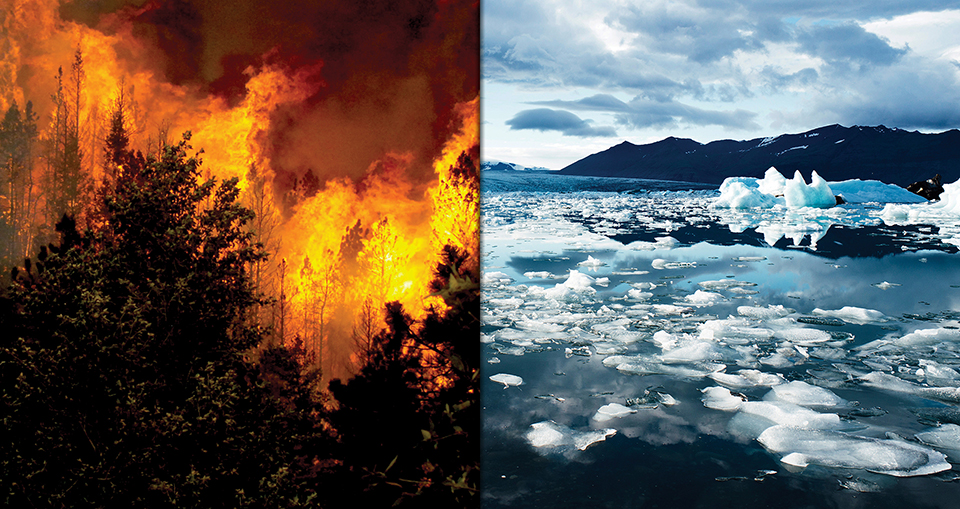
One surprising culprit? Arctic sea ice.
The newest findings from UNC Greensboro Professor of Geography Paul Knapp are what he likes to call “accidental science.”
In 2015, Dr. Knapp and his colleague Dr. Peter Soulé, a faculty member at Appalachian State University, were in Montana studying alpine larch — a conifer native to northwestern North America. While working on another project, they noticed that wide tree rings corresponded with years of increased wildfire activity in the Northern Rocky Mountains.
From there, they decided to take a look at the relationship between the tree rings and levels of sea ice. The two confirmed that wider rings corresponded with years of low sea ice, which led them to the next logical question: Is there a relationship between fire activity and Arctic sea ice?
According to their recently published study — which examined Arctic sea ice extent and wildfire activity for seven regions in the western U.S. from 1980 to 2015 — the answer is yes: The rapid decrease in Arctic sea ice in recent years has likely helped create the conditions for increased wildfire activity, specifically in the northwestern United States.