From the Spring 2018 issue of UNCG Research magazine
For more than a decade, parents have worried about the dangers of disease due to first-person exposure to Bisphenol A, or BPA, an industrial chemical used in plastics and epoxy since the 1960s. But few know that the impacts of exposure can travel onward to future generations as well. And scientists don’t fully understand why or how it happens.
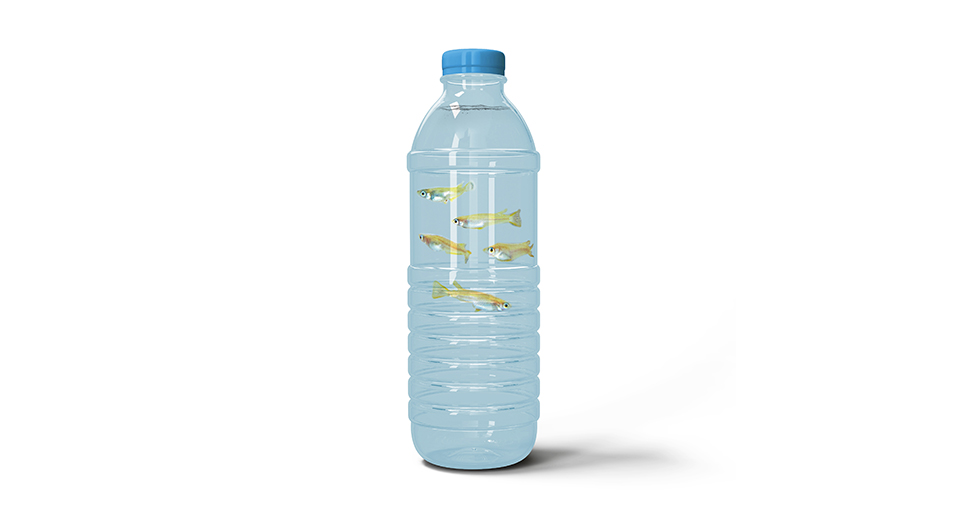
Those are the answers Dr. Ramji Bhandari, assistant professor of biology, is trying to unearth. By using a novel research model, the medaka fish, he’s investigating BPA’s transgenerational effect — how parental exposure alone can cause chemical changes to DNA in offspring and in third or fourth generations and how those changes lead to adult-onset reproductive problems.
According to studies in rats and mice, he says, those reproductive problems include prostate cancer, infertility, polycystic ovary syndrome, preeclampsia, endometrial cancer, and ovarian cancer.
Knowing the impact is paramount because plastic is everywhere. Recent studies, Bhandari says, show measurable concentrations of BPA in all human blood and urine samples. Understanding its effects can unlock how to treat future generations for diseases.
In a developing embryo, chemical signals on DNA tell a cell how to specialize, including the cells that produce sperm and eggs. BPA can alter these signals in developing cells, Bhandari says, and these modifications can be retained throughout our lives. It’s called an epigenetic change. “When sperm and egg pass parental information to offspring, these chemical modifications can go with them and cause health problems later in children’s lives.”
Composite image by Mike Dickens