French impressionist Edgar Degas once said, “Art is not what you see, but what you make others see.”
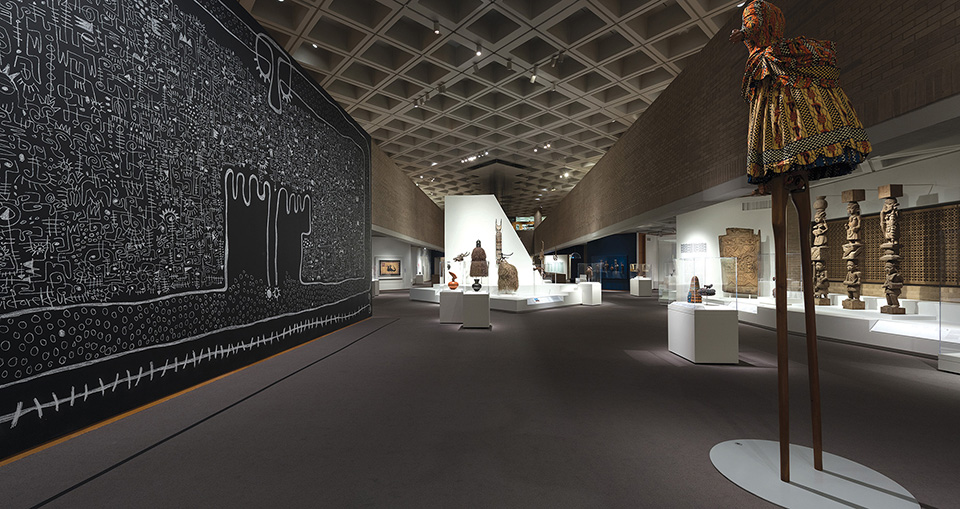
That’s certainly the case at the North Carolina Museum of Art’s newly expanded African art gallery — an effort made possible through the expertise of Elizabeth Perrill, associate professor of art history.
At a time when African art is becoming increasingly popular among collectors and museums worldwide, Dr. Perrill’s skilled oversight as curator helped the museum reimagine and nearly triple the size of this gallery space. In particular, Perrill brings a specialized expertise in Zulu ceramics, with her seminal book on Zulu pottery now a touchstone for educators, curators, and anyone developing collections in the United States, Europe, and South Africa.
Her contribution also comes as a timely addition to the state museum during an era when African immigration to the southeastern United States, including North Carolina, is at an all-time high. The state’s African-born population has doubled each decade since the 1970s. As of 2014, nearly 6 percent of the state’s foreign-born residents came from Africa.
“As we become a destination state for African immigrants, we want all of North Carolina to understand the diversity of Africa,” Perrill says. “We want visitors to recognize that Africa is an entire continent, and there are subtleties and complexities within each region.”
Visitors to the gallery, which opened this past summer, are now greeted by a large map of Africa divided into regional sections. The exhibit’s focus areas are dedicated to specific kingdoms, regions, and aesthetic traditions spanning 16 centuries. Section titles such as “Gold as Regalia,” “Art Abounds,” and “Geometry and Abstraction” are designed to “shake people out of their expectations of what African art is,” Perrill says.
Photography courtesy of the North Carolina Museum of Art.